Search This Blog

Tuesday, October 22, 2013

Wel-penela-Cardiosprmum halicacabum


Botanical name:-Cardiosprmum halicacabum


English name :-
Sinhala name:- Wel penala
Tamil name :-Kottavan,Mutakkarran
Sanskirt name :-Bunu-uchchhe,Indravalli, Jyotishmati
Grows in:-Sri Lanka,India,
tropical and subtropical Africa and Asia.
Edible parts:-Whole plant
Ayurvedic usage:-
Treatment for:-Dysentery,Hernia,Rheumatoid arthritis
Parts used to make medicine:-Whole plant
Propagation:-Seeds

Penela is an annual herb which is very common in the low country and throughout the tropics. It is small delicate, smooth, climber. Its leaves are alternate and the leaflets are coarsely toothed. The lowest pair of flower stalks Are converted into spiral tendrils and the seeds are in three tangled capsules.
It was very largely used the Sinhalese settlers to alley pains due to sprains and contusions about the joints. The roots and the leaves are commonly used in medicine. A decoction of the Wel- penela roots is given in half tablespoon- ful does twice a day for bleeding piles. The leaves are used for rheumatism, nervous diseases, hemorrhoids and chronic bronchitis. The juice of the leaves are put into the ear for ear-ache. Equal parts of Wel penel leaves, Shinda-lunu .the root bark of Hin-kumbuk (Terminalia arjuna) Vadakaha (Acorus Calanus) are pounded and made into a paste with milk.

Wel-penela is a cooling drink when prepared as a canjee. You prepare it just like gotukola kanda. It can be taken in the morning as a drink for breakfast. The external use of Wel penela ,The leaves are applied as a poultice for srineruption. They arecoated with castor oil and are applied on swellings and tumours. Wel penela is used in preparing an oil for infants when they find it difficult to breath through the nose.

Coccinia grandis L.


  Scientific name-Coccinia grandis L.
  English name-Ivy gourd
 Tamil name-


 Stems  mostly glabrous, produced annually from a tuberous rootstock; tendrils simple, axillary. Leaves  alternate, simple, blade broadly ovate, 5-lobed, 5-9 x 4–9 cm, acute and mucronate at the apex, cordate with a broad sinus at the base; surfaces glabrous or scaly, with 3-8 glands near the base; margins denticulate; petiole 1–5 cm long. Inflorescence   usually of solitary, axillary flowers. Calyx  of 5 subulate, recurved lobes 2-5mm long on the hypanthium; peduncle 1–5 cm long. Corolla campanulate, white, 3-4.5 cm long, deeply divided into 5 ovate lobes. Stamens 3, present as staminodes in female flowers. Ovary  inferior. Fruit a smooth, bright red, ovoid to ellipsoid berry 2.5–6 cm long).

Treatment for: Diabetes,Wounds, Polyurea,Liver disorders,Menorrhagia,Asthma,Skin diseases,Jaundice,cough,Anaemia .

Parts used in treatment:Whole plant

Manel-Nymphaea nouchali


Scientific name--Nymphaea nouchali
English name-Blue Water lily
Tamil name-
Sanskirt name-

   Manel is an aquatic plant found in lakes and ponds of law country dry zone.
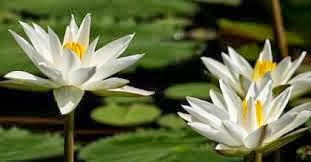
Two types of Manel found as blue and white.Blue  coloured Manel is the national flower of Sri Lanka.It's used to produce medicine for many differentdiseases.
This is an aquatic plant with erect rhizome.Stalk are purplish green with a smooth surface.Thickness is about 8 mm. Leaf blade is between 10-30 cm
 and purplish.Leaves float on surface of water and are circular shaped.They are shining green in colour. The flowers are  white ,blueor read coloured. Stamens are slightly purple in colour.Spherical fruit can be seen. Flower is kept open from sun rise to sun set.
The stem ,roots,leaves,of the plant used as vegetable.Cultivated in ponds for beauty in landscaping.

It is used to treatments of diseases such as Piles, Liver diseases,Urinary tract
diseases.
The tubers and stem  of the Manel plant is used to produce ayurvedic medicine.

Timberi/Diospyros malabarcia

                        TIMBERI HAS ANTISEPTIC PROPERTIES    Timibiri is a dry zone tree, but it is also generally found near streams or...